Category Archives: News

Church takes stock of its trees 

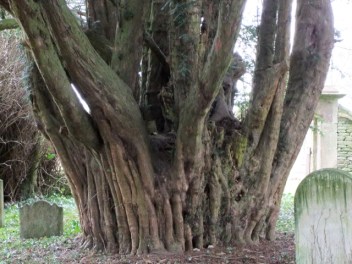
DSCF1915.jpg
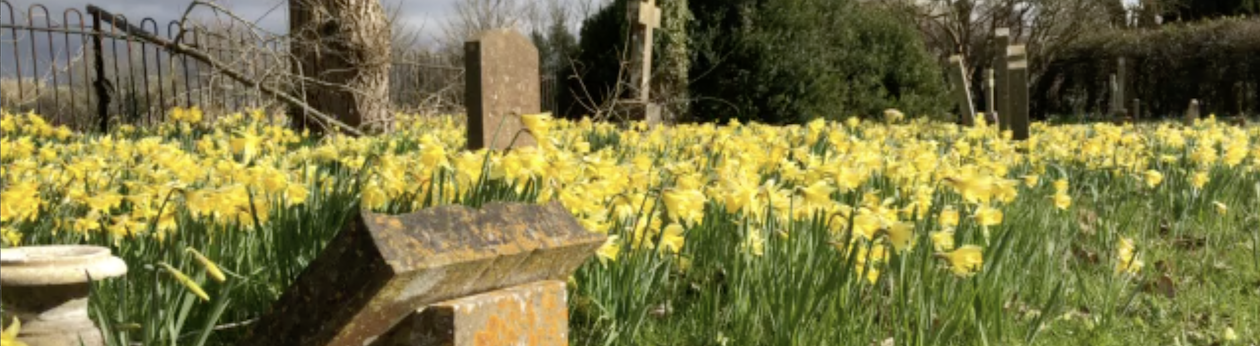
Chadlington Churchyard – a haven for nature

No-one knows just how many trees the Church of England has on its land.  It has some 10,000 churchyards, and many often provide the only, ‘green lung’ within a community and rare habitats for a wide range of biodiversity.

The Church is responsible for a large number of trees which, like churches, need managing. The often great age of churchyards, and the long term protection they offer, means many of these trees are particularly important, and others have the potential to become so. The longer protection offered by churchyards means they often contain ‘veteran’ trees – those with ancient characteristics – and as such hold particular importance ecologically and culturally. This natural heritage is often managed by people with little specialist arboricultural or interpretation experience.

DSCF0199.jpg
Yew tree in Heythrop Old Churchyard

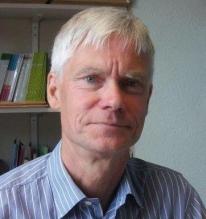
Whilst churchyard yews are well known for their great age, there are many other species which provide a wealth of value to local communities. They may hold the secret to fighting threats to trees such as ash dieback and those affecting chestnuts, elms and oaks suggests David Shreeve, Environmental Adviser to the Archbishops’ Council. “If you’ve a variety of elm for example, which has not been affected by disease, perhaps there is something special about them that make them resistant,” he explains. “Churchyards may be the Noah’s Ark for trees.”

Two free churchyard trees conferences supported by the Heritage Lottery Fund are being held this autumn. Aimed at archdeacons, clergy, churchwardens, DAC Secretaries and Diocesan Environment Officers, friends groups, tree officers and all those involved in the care of churchyard trees. They will promote greater awareness of the importance of churchyard trees and encourage maintenance, future growth and interpretation with the support of the community.

The conferences will be held in Liverpool Cathedral on 6 October 2016 and St John’s Waterloo on 2 Nov 2016 and feature leading churchyard and arboriculture experts who will discuss the support and management churches can use to protect the future of churchyard trees.

Both events are being organised by The Conservation Foundation in association with the Church of England’s Environmental Working Group, Mission and Public Affairs, Cathedrals and Church Buildings along with Caring for God’s Acre and The Charter for Trees, Woods and People.

Those interested in attending for the free conferences can register at:

www.conservationfoundation.co.uk/churchyardtrees

And if you do go, please let us know!

With thanks to Nigel Winser of Chadlington for informing us of this event

Oxfordshire Credit Union

498c7619-f894-47a5-a953-1b0058da3b8d

David Soward, a member of Ascott Church, has recently become Chair of the Oxfordshire Credit Union, having spent the last two years as a member of the Board in a marketing role. In 2014 and 2015 he oversaw the development of our new website and the move into social media, along with our rebranding exercise and the fresh new look on our banners and leaflets. He has a background in project development and has worked at several Citizens Advice branches to build projects in financial inclusion, volunteer training and consumer empowerment. He is also an economist and a musician and runs the Wychwood Circle

His vision for OCU is to transform its profile from a local Oxford community bank to a county-wide savings and loans organisation reaching out to ever more of the people in Oxfordshire who most need us.

What is a Credit Union?

Credit Unions exist to foster a habit of saving and to enable people to borrow from their own community.  While some of us are both ‘financially included’ and indeed financially capable, many of our neighbours are not:  they may have had bad experiences with banks, had loan requests rejected, have slipped into debt when their benefits were ‘sanctioned’, etc.  Or they may simply never have saved because they didn’t like the institutions they would have had to entrust their money to.
Oxfordshire Credit Union is open to anyone either living or just working in Oxfordshire (Cherwell Community Bank is also available to people in the north of the county).  We don’t have ‘branches’ since the cost would be prohibitive but we offer a Paypoint card (for paying in at your local corner shop or garage) and a pre-payment Visa debit card for paying bills or shopping online.  If members need to borrow we offer an affordable, ethical and locally generated alternative to commercial lenders: our loans will never be as cheap as the best high street rates nor as criminally expensive as the worst ‘payday’ lenders, but members know they will be given a chance and treated fairly.  They will also be helping their community.
For wealthier and financially astute members there are also opportunities to support us through subordinated loans and grants.
Contact us by email (info@ocu.coop), by phone (01865 777757), or online (oxfordshirecreditunion.co.uk).

Latest news from CRAG

Below is an update from our friends from the Charlbury Refugee Action Group

How you have brought more help to refugees here and in Calais

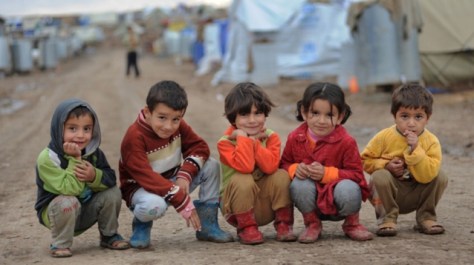
24dd328c-cd09-43a5-a0ce-8dee9a7a0108.jpg

First some brief bad news. (Good news is in the remaining paragraphs!)

👎 Refugees in camps in Calais are running out of food, at the same time as their numbers increase daily. It’s partly donor fatigue, but partly that needs are becoming increasingly acute elsewhere.

☀️ But the good news is that we have been able to help, thanks to your fundraising and contributions. One member found £30 in the street and gave it to CRAG! Another member has set up a standing order to CRAG for £25 a month. While the Strings and Pipes group at Charlbury baptist church very kindly donated the proceeds from their recent concert. As this was given through the church, it was possible to add gift aid, with the result that £375 came to CRAG.

☀️ All this has replenished our funds, so at the weekend we shall be sending £500 to Calais Kitchens, who distribute food packages to people who self-cater, in particular mothers and children, as well as supplying food to the several free kitchens in the camp. It’s a drop in the ocean, but many drops do make an ocean.

☀️ This week local refugee support groups were asked if anyone could help arrange an emergency trip for a father and his two children to visit his wife and a third very sick child in hospital in Southampton. CRAG came up trumps. Thank you Sophie!

☀️ The Adopt-a-Room scheme to furnish homes for a further four refugee families arriving in Witney this summer was an immense and immediate success, thanks to stalwart work by Luci Ashbourne and the Witney group. Thanks also go locally to Charlbury Quakers; Liz Soar and friends; Brigid Avison, Angela Gwatkin and other members of three local meditation groups; and Churches Together in Charlbury. Groups and individuals in Hook Norton and elsewhere played a major part too. It is wonderful to see so many caring people contributing in so many ways to help make these families feel truly loved and welcome.

☀️ One of you has asked if he can add gift aid to a donation to CRAG of £500. The short answer is no, as we are not a registered charity. But we have suggested several charities working in Calais and Greece to whom payments can be made online and where the donor can add gift aid. This is invaluable, as his £500 immediately grows to £625. For more details, see our last newsletter.

Another answer to this question is that subject to certain restrictions, churches are able to claim gift aid on money given to them, and then donate that money to other causes which are not themselves charities (such as CRAG).

👉 That’s all for the moment. Please keep in touch at www.facebook.com/charlburyrefugee and remember — your help is always needed! Email us at charlburyrefugee@gmail.com with your ideas and suggestions.

Angela and Jon

Letter from Bishop Steven

Posted on 6th July, 2016

To the clergy and people of the Diocese of OxfordSteven-for-enews-cropped-300x262
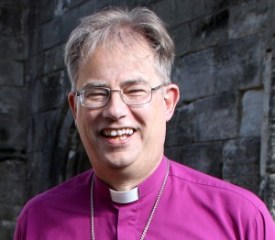
Dear Friends and Colleagues,

Thank you for your various messages of welcome and for your prayers following the announcement of my nomination as the Bishop of Oxford. It’s an enormous honour and privilege to be appointed to this role and I look forward very much to serving the communities of Berkshire, Buckinghamshire and Oxfordshire in the coming years.

My Confirmation of Election as Bishop of Oxford will be held on 6thJuly. I am due to pay homage to Her Majesty the Queen later in July and resume my place in the House of Lords.  I will continue to meet with the senior team in Oxford and plan for the autumn.

Ann and I hope to move to the new See House in Kidlington at the end of August and I will be working to a normal diary in the diocese from early September.  My inauguration is set for Friday 30th September in the Cathedral.  There will then be four Welcome Eucharists at which I will preside and preach, one for each Archdeaconry:

Episcopal Area Date Day Time Venue
Reading 5th October 2016 Wednesday 19.45 Reading Minster
Dorchester 9th October 2016 Sunday 15.30 Dorchester Abbey
Oxford 12th October 2016 Wednesday 19.30 Church of the Holy Family Blackbird Leys
Buckingham 13th October 2016 Thursday 18.00 All Saints High Wycombe

I would like to meet as many people as possible over the first few weeks in post so please put one of these dates in your diary and I look forward to seeing you there.

I hope to visit the parish clergy of the Oxford Area in October and November.  I am also planning a series of Deanery Days from November to July to begin to get to know and to listen to the whole Diocese.  During those visits I look forward to engaging with lay people and clergy and getting to know the wider community as well as the church.  I also look forward to being out and about across the whole Diocese Sunday by Sunday.

You can discover something about me in advance from the Diocesan website, should you wish to do so.  I was formed as a parish priest in Halifax.  I was shaped as a thinker and writer in Durham and through travelling the country as Archbishops’ Missioner.  I have been forged as a Bishop in Sheffield and South Yorkshire, seeking to recall the Church here and elsewhere to the mission of God.

I’m conscious I will have a much to learn in my early years in Oxford.  Please pray for me: for the gifts of humility, wisdom and gentleness for this new ministry.  Pray in the words of the ordinal that my heart may daily be enlarged to love this great Diocese to which God has now called me.

I’m looking forward very much to working with Bishop Colin, Bishop Andrew and Bishop Alan in the coming years and with the rest of the senior team.  I’m conscious that the Diocese owes a particular debt to Bishop Colin for his care and leadership during the long vacancy.

Based on the listening I have done so far, I will focus my ministry across the whole Diocese in three areas in the early years: on engagement with children, young people and young adults; on enabling lay discipleship in the world and on engaging with the poorest communities across the Diocese. These priorities are not a new Diocesan strategy.  That may emerge over time.  They are initial themes for my own engagement with the whole Diocese and I look forward to taking them forward with you.  .

I believe that the Christian faith and the Christian church will become ever more central in the life of our nation and the world in the 21stCentury as people seek again for meaning, for values, for purpose and for hope.

God has called the Church to be a community of mercy and kindness, reflecting the nature of Jesus Christ and telling the good news of his love.  Together we are called to be a community of missionary disciples: faithful, united, hopeful, creative and rejoicing in God’s grace.

I look forward very much to meeting you, to knowing you and being known and to working with you,

In Christ

+Steven Oxford

Email: bishop.oxford@oxford.anglican.org
Twitter: @Steven_Croft
Blog: http://blogs.oxford.anglican.org/
Lead thieves strike in Chadlington

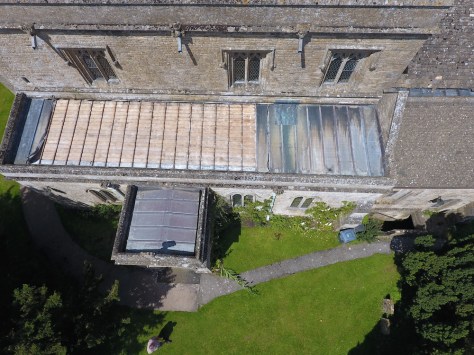
DJI_0193 copyfb.jpeg

Sometime between Sunday 3 and Tuesday 5 July, lead thieves stripped three-quarters of the lead from the south aisle of Chadlington Church. It was clearly a highly professional job – not only did they smash the security lights around the church they were also very neat! Mercifully, the weather has been kind and the roof has been made weatherproof whist we make arrangements for its replacement.

Please be very vigilant around all our churches and report anything out of the ordinary.  Chadlington is the fourth church to be hit in this Deanery in recent months.

DJI_0197 copyfb.jpeg


EU Referendum

On 23 June each of us will be asked to answer the question “Should the United Kingdom remain a member of the European Union or leave the European Union?”  While the overarching question may itself seem simple, the sub questions it contains are multiple and complex and we are being bombarded daily in the media with claims and counter claims. How then should we as Christians make sense of this complexity? What should provide the lens through which we sort through all the information with which we will no doubt be bombarded over the coming weeks and months and come to some decision with integrity and in good faith?

At the request of a number of people in the Benefice we are trying to organise a meeting with an outside speaker to lead a discussion on this important issue.  So far we have been unsuccessful!

However, The Joint Public Issues Team of the Baptist Union of Great Britain, the Methodist Church, the United Reformed Church and the Church of Scotland has produced a useful,  balanced and impartial guide, with appropriate question and Bible references, which you can view here or pick up a copy from the back of Church.

You might like to use the following prayer.

Cg-LJgZU4AANA9L

The Longest Night

The 21 December is the longest night of the year.  It is cold and dark and the warm balmy evenings of summer seem a long way away.

Over the past few weeks we have been remembering in prayer all those who find Christmas difficult.  Dealing with the loss of a loved one, facing life after divorce or separation, coping with the loss of a job, living with an illness that puts a question mark over the future. Things like this make the joviality of celebration painful for many people who feel ‘down’ at Christmas. It is good to be able to
acknowledge these feelings and to bring them to God.

The author Jan Richardson has written a beautiful piece of prose that offers healing and hope.

May the presence of Christ our Light, who goes with us in the darkness and in the day, be yours this Christmas.

Mark Abrey


Blessing for the Longest Night

longest night

All throughout these months
as the shadows
have lengthened,
this blessing has been
gathering itself,
making ready,
preparing for
this night.

It has practiced
walking in the dark,
traveling with
its eyes closed,
feeling its way
by memory
by touch
by the pull of the moon
even as it wanes.

So believe me
when I tell you
this blessing will
reach you
even if you
have not light enough
to read it;
it will find you
even though you cannot
see it coming.

You will know
the moment of its
arriving
by your release
of the breath
you have held
so long;
a loosening
of the clenching
in your hands,
of the clutch
around your heart;
a thinning
of the darkness
that had drawn itself
around you.

This blessing
does not mean
to take the night away
but it knows
its hidden roads,
knows the resting spots
along the path,
knows what it means
to travel
in the company
of a friend.

So when
this blessing comes,
take its hand.
Get up.
Set out on the road
you cannot see.

This is the night
when you can trust
that any direction
you go,
you will be walking
toward the dawn.

© Jan Richardson, from janrichardson.com

Image: Longest Night © Jan Richardson used with permission

Advent Supper 4

If Jesus was born today, what sort of world would he find?

Twenty-two of us gathered in Chadlington last Wednesday for the last of our series of Advent Suppers, this time on the theme of ‘welcome’ – or perhaps, what it means to offer or receive a ‘well-coming’.  The evening began with a short discussion, during which we considered what the defining characteristics of a welcoming country might be.  Our answers included:

  • acknowledging strangers in such a way as to allow communication, even if there are language differences
  • showing interest by asking questions in a sensitive, non-aggressive, way
  • smiling, and making eye contact
  • showing respect and giving dignity
  • practical help such as hospitality, and providing information and basic necessities
  • being aware of cultural differences eg behaviour normal to us, that might inadvertently cause offence

The TED talk that followed, How to help refugees rebuild their world, was given by Melissa Fleming of the UN Refugee Agency.  It is a strong presentation – and in charting the progress of particular refugees it illustrates well the power of the human interest story to inspire our compassion and empathy (two of our themes from earlier weeks).  It is perhaps human nature to find it easier to respond to individual people or families, whereas the plight of anonymous thousands can leave us feeling helpless.

The talk, recorded in 2014, presented many surprising facts about the ongoing refugee crisis in the Middle East:

  • 86% of those fleeing their homes find shelter in neighbouring countries (Lebanon, with a population of just 5 million has 1 million refugees),
  • only 14% head for Europe and the West.
  • Being a refugee is not a temporary condition – the average length of time is 17 years.
  • 50% of refugees are children, for whom there is a scarcity of education beyond primary level.  The lack of funding for secondary, let alone tertiary, education means that a whole generation is being wasted.
  • The very people who need resourcing and equipping to rebuild their countries in years to come are being left vulnerable and without hope for the future.

There was plenty of food for thought here to stimulate our discussion during the meal that followed, after which we looked at a number of short bible quotations from both the Old and New Testaments linking the theme of God’s commandments to care for ‘the stranger’ and for each other.  Far-ranging discussion in the groups included consideration of how ‘justice’ can be defined (whose justice is being enforced?); what our responsibilities to refugees might be (do they, for instance, include trying to bring wars to an end?); the effects of changes in society since biblical times with people nowadays more likely to be dislocated from families and places of origin, and the loss of inter-generational living.  As at previous Advent suppers the evening ended with discussion on how to put our responses usefully into practical action.

The series of Advent Suppers has been both stimulating and an excellent opportunity for fellowship.  Special thanks go to all involved in setting up the evenings, those who prepared the hall, cooked and served the very delicious meals and drinks, and washed up.  A Lent series is already being planned!

Marian Needham


ADVENT SUPPER – WEEK  4
16 December 2015

TED Talk – How to help refugees rebuild their world

For discussion before the TED Talk:

What are the defining characteristics of a welcoming country? (Have someone at your table jot down the characteristics you have identified).

Some questions to consider during our meal:-

Discuss your reactions to any of the points the speaker made, and consider the implication for our country, our church community and ourselves as individuals.

Here are some that you might like to consider.

  1. What is a refugee/What makes people become refugees?
  2. What choices do they have?
  3. How extensive is the refugee problem today and where is it concentrated?
  4. What responsibilities do we have towards refugees?

If you think we do

What can we do to help solve the problem?

Biblical reflection

God accepts all in Jesus
‘My house shall be called a house of prayer for all the nations (Greek ethnos), But you have made it a robbers’ den.”  (The word ethnos is the New Testament word for “gentiles.”) (Mark 11:17)

We Were All Baptized By One Spirit
Just as a body, though one, has many parts, but all its many parts form one body, so it is with Christ. For we were all baptized by one Spirit so as to form one body—whether Jews or Gentiles, slave or free—and we were all given the one Spirit to drink. Even so the body is not made up of one part but of many. (1 Corinthians 12:12-14)

Invite the Stranger In
For I was hungry and you gave me something to eat, I was thirsty and you gave me something to drink, I was a stranger and you invited me in, I needed clothes and you clothed me, I was sick and you looked after me, I was in prison and you came to visit me.’ (Matthew 25:25-36)

Love Your Neighbour as Yourself
For the entire law is fulfilled in keeping this one command: “Love your neighbor as yourself.” (Galatians 5:14)

Leave Food for the Poor and the Foreigner
When you reap the harvest of your land, do not reap to the very edges of your field or gather the gleanings of your harvest. Do not go over your vineyard a second time or pick up the grapes that have fallen. Leave them for the poor and the foreigner. (Leviticus 19:9-10)

If you come with us, we will share with you whatever good things the LORD gives us.” (Numbers 10:32)

God Loves the Foreigner Residing Among You
He defends the cause of the fatherless and the widow, and loves the foreigner residing among you, giving them food and clothing. And you are to love those who are foreigners, for you yourselves were foreigners in Egypt. (Deuteronomy 10:18-19)

The Sin of Sodom: They Did Not Help the Poor and Needy
Now this was the sin of your sister Sodom: She and her daughters were arrogant, overfed and unconcerned; they did not help the poor and needy. (Ezekiel 16:49)

Do Not Oppress a Foreigner
Do not oppress a foreigner; you yourselves know how it feels to be foreigners, because you were foreigners in Egypt. (Exodus 23:9)

Do not despise an Edomite, for the Edomites are related to you. Do not despise an Egyptian, because you resided as foreigners in their country.(Deuteronomy 23:7)

Do Not Deprive Foreigners Among You of Justice
“So I will come to put you on trial. I will be quick to testify against sorcerers, adulterers and perjurers, against those who defraud laborers of their wages, who oppress the widows and the fatherless, and deprive the foreigners among you of justice, but do not fear me,” says the Lord Almighty. (Malachi 3:5)

Questions to consider

  • HOW DOES WELCOME RELATE TO THE FIRST TWO THEMES OF COMPASSION AND EMPATHY THAT WE DISCUSSED IN OUR ADVENT SERIES?

Advent Supper 3

If Jesus was born today, what sort of world would he find?

A very cheerful and large group gathered for our session this week on What sort of community would Jesus find. We listed to a TED talk by psychologist Sherry Turkle entitled Alone but together – see below for details and questions that we consideredThe Bible passage for exploration that followed the talk was 1 Corinthians 12:12-26 in which St Paul examines the body and how each element is related to the whole.

This week people seemed even more relaxed and engaged than last week – with humour playing a very enlivening role at some tables! The talk explored the potential effect that electronic communication and social networking could have on the way people communicated with each other. And how that could affect the way society as a whole worked. Some of us fell more into the category of enlightened electronic Luddites that avid Social networkers, but all acknowledged the potential negative and positive effects that Twitter, Facebook and the like could have. The point raised in the talk about people withdrawing  from company onto their electronic devices where they could create and control their own virtual world, rather than interact with others face to face, had been noticed by everybody. The potential to for this to limit the social competence of  people young and older was also noted.

There was also discussion about whether the fear of intimacy, which had also been raised in the talk, and in the bible passage discussion on how the church worked as a community. Are people fearful of being open to others? Do they expect to engage with others at a deeper level when the join the church community? Does the church encourage and facilitate deeper personal relationships?

There are no slick answers to the challenge of living as a community, especially within the church. Electronic communication had real potential for harm, but equally real potential for building community, if it was used as a powerful and creative tool facilitating and supporting real relationships. There was strong agreement that Jesus would go onto Facebook if he were to come again now, as it would provide a great opportunity for him to reach many.

Next week we will be exploring welcome.   There is still time to sign up – don’t miss out! – you can book your place by clicking here.

Peter Silva


ADVENT SUPPER – WEEK  3
9 December 2015

TED Talk – Connected, but alone?

Some questions for discussion during our meal:-

  • Discuss your reactions to some or all of these points the speaker makes, and consider the implications of the situations she describes.‘We’re getting used to a new way of being alone together. People want to be with each other, but also elsewhere – connected to all the different places they want to be. People want to customize their lives. They want to go in and out of all the places they are because the thing that matters most to them is control over where they put their attention.’

    ‘Human relationships are rich and they’re messy and they’re demanding. And we clean them up with technology. And when we do, one of the things that can happen is that we sacrifice conversation for mere connection.’

    ‘And so from social networks to sociable robots, we’re designing technologies that will give us the illusion of companionship without the demands of friendship. Our ‘flight’ from real time conversation denies the capacity for self reflection.’


  • Were there any other points that particularly caught your attention? Why? 
  • To what extent do you recognise any of the habits, changes and trends the speaker talks about in yourself, and in others you know? What effects has it had on relationships?

Biblical reflection

1 Corinthians 12.12-26

For just as the body is one and has many members, and all the members of the body, though many, are one body, so it is with Christ. For in the one Spirit we were all baptized into one body—Jews or Greeks, slaves or free—and we were all made to drink of one Spirit.

Indeed, the body does not consist of one member but of many. If the foot were to say, ‘Because I am not a hand, I do not belong to the body’, that would not make it any less a part of the body. And if the ear were to say, ‘Because I am not an eye, I do not belong to the body’, that would not make it any less a part of the body. If the whole body were an eye, where would the hearing be? If the whole body were hearing, where would the sense of smell be? But as it is, God arranged the members in the body, each one of them, as he chose. If all were a single member, where would the body be? As it is, there are many members, yet one body. The eye cannot say to the hand, ‘I have no need of you’, nor again the head to the feet, ‘I have no need of you.’ On the contrary, the members of the body that seem to be weaker are indispensable, and those members of the body that we think less honourable we clothe with greater honour, and our less respectable members are treated with greater respect; whereas our more respectable members do not need this. But God has so arranged the body, giving the greater honour to the inferior member, that there may be no dissension within the body, but the members may have the same care for one another. If one member suffers, all suffer together with it; if one member is honoured, all rejoice together with it.

Questions to consider

  • What is Paul’s vision for Christian community living in this passage?
  • How does it contrast with what’s happening in digital communities and relationships?
  • How could we, in the Chase Benefice, respond to the isolation and false connectedness suggested in the talk?
  • How can we teach younger people to have and value real conversations?
  • Are there ways in which we could use digital communication and connectedness to bring about positive benefits for a community?